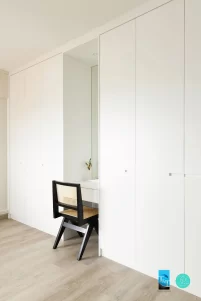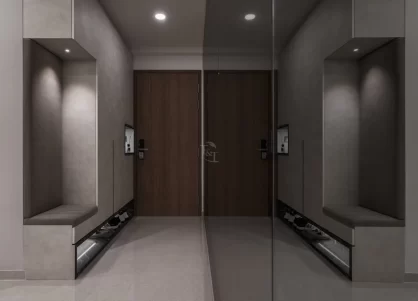
Japandi style is a home design approach that mixes Japanese minimalism with Scandinavian warmth. It uses warm wood, soft neutral colours, low furniture and hidden storage to make a home feel calm and uncluttered. In Singapore, it works especially well because it suits compact HDB flats and condos, hides everyday mess, and makes small rooms feel bigger without heavy hacking.
This guide explains what the style means, which materials survive our humidity, how it differs from Scandi interior design, and how to plan it in a new flat.
What Japandi style really means
Japandi comes from two ideas.
The Japanese side is wabi-sabi. It finds beauty in things that are simple, natural and slightly imperfect. A wood grain that is not uniform is a feature, not a flaw.
The Scandinavian side is hygge. It is about comfort, warmth and everyday ease. Soft lighting, cosy textiles and furniture you actually want to sit on.
Put them together and you get rooms that are quiet but not cold. Japanese design alone can feel strict. Scandinavian design alone can feel bright and a little plain. Japandi sits in the middle.
Three rules hold the whole style together:
- Less, but better. Fewer pieces, each one chosen with care.
- Natural materials. Wood, stone, linen, cotton, rattan, clay.
- Nothing on display that does not need to be. Surfaces stay clear.
Why Japandi suits Singapore homes
Most of us live in flats where every square metre counts. Japandi works with that limit instead of fighting it.
It opens up sightlines. Low sofas, low beds and low consoles leave more walls visible above them. Standard HDB ceilings feel taller as a result.
It hides clutter. Built-in carpentry and closed storage keep daily items out of sight. In a humid city where surfaces collect dust fast, clear counters are also easier to wipe down.
It spreads daylight. Matte, light-toned finishes bounce sunlight deeper into corridors and rooms that sit away from windows.
It ages well. Natural wood tones and neutral walls do not date the way a bold trend colour does. That matters when a renovation is meant to last ten years or more.
The Japandi colour palette
Skip pure white. Japandi walls sit in warm off-white, oat, sand, soft grey or a muted grey-green. Use matte paint, never gloss.
Then layer in depth. A Japandi interior is not one flat beige note. The style comes alive when a pale floor meets a darker accent: charcoal, deep walnut, clay or black.
A simple formula that works in most flats:
- Light warm floor.
- Walls one or two shades lighter than the floor.
- Carpentry laminate matched closely to the floor tone.
- One darker element per room – a dining table, open shelving, a feature cabinet.
That contrast is what separates a Japandi room from a generic pale one.
Materials that survive our climate
This is where many Japandi homes go wrong. A look built for a Copenhagen winter needs adjusting before it lands in a flat in Singapore.
Timber. Untreated solid wood can warp or swell in high humidity. Sealed timber, engineered wood, or a good wood-grain vinyl or laminate gives the same warmth with far less risk.
Stone. Honed or matte-finish stone and sintered surfaces suit the style better than polished slabs, and they hide water marks.
Fabrics. Linen and cotton breathe well and feel right for the look. Avoid heavy velvets and thick rugs that trap moisture.
Rattan and cane. Beautiful, but keep it away from wet areas and direct afternoon sun, which fades and dries it out.
Plants. Real greenery is part of the style. Choose species that handle indoor light and air-conditioning.
Japandi vs Scandi interior design
People often use the two terms as if they mean the same thing. They do not.
Scandi interior design leans bright. Crisp whites, pale woods like ash and birch, cooler undertones, more pattern and the occasional pop of colour. The mood is light and airy.
Japandi runs warmer and darker. It mixes light and dark wood together, keeps the palette earthy, adds handmade and slightly irregular pieces, and uses almost no pattern. The mood is grounded and still.
A quick test: if a room feels bright and cheerful, it is Scandi. If it feels calm and quiet, it is Japandi.
Planning a Japandi BTO from an empty flat
A new flat is the easiest place to get this style right, because you choose every finish from the start instead of working around what is already there.
Settle the floor first. Everything else follows it. Once the floor tone is set, carpentry, doors and skirting can all be matched to it.
Keep the flow uninterrupted. Running one floor finish from the entrance through the living and dining area makes a 4-room flat read as one continuous space.
Design storage before furniture. Full-height carpentry with flat, handleless fronts is the backbone of a Japandi BTO. It absorbs shoe racks, cleaning tools, luggage and appliances so the open areas can stay empty.
Keep hacking light. Japandi does not need walls knocked down. Half-height partitions, glass panels or fluted screens divide space while still letting light through.
Plan lighting in layers. Skip the single bright ceiling light. Use warm-temperature downlights, a pendant over the dining table and concealed strip lighting under carpentry.
Firms that handle HDB and BTO work regularly, including T&T Artisan Design, list Japandi among the styles they design for – useful if you want the carpentry drawn up properly rather than assembled piece by piece.
Common Japandi mistakes
Going too bare. Empty is not the same as calm. A room with nothing in it feels unfinished. Texture fills the gap: a linen throw, a ceramic bowl, a woven basket.
Using only one wood tone. Everything in the same oak finish flattens the room. Mix two or three related tones.
Buying decor instead of designing storage. Japandi falls apart the moment daily objects have nowhere to live. Storage first, styling last.
Picking cool greys. Grey with a blue undertone fights the warm wood. Stay on the warm side of neutral.
Treating it as a shopping list. A few Japanese-looking props on a standard layout will not create the effect. The style comes from the palette, the light and the restraint.
Read Further : Modern Contemporary Interior Design: A Complete Style Guide for Singapore Homes
Making it work for the way you actually live
Japandi is only useful if you can maintain it. A home with young children, a large collection or a hobby that needs equipment can still use the style – it just needs more closed storage and fewer open shelves.
Be honest about this at the planning stage. A Japandi interior that you have to tidy for an hour every night is not a calm home. One that hides clutter by design is.
Start small if you are not renovating. Clear your surfaces, swap harsh white bulbs for warm ones, add a linen curtain and one wooden piece. The mood shifts faster than you would expect.
Frequently Asked Questions
Not necessarily. The look depends on tone, restraint and texture rather than costly materials. A well-chosen laminate and a matched floor can read as Japandi, while an expensive sofa in the wrong colour will not.
Yes. Smaller flats often suit it better, because the style relies on clear surfaces and low furniture. The main change is proportion – choose slimmer pieces and keep open shelving to a minimum.
Usually, yes. Keep pieces in wood, linen, leather or neutral upholstery, and remove items that are glossy, heavily patterned or brightly coloured. You do not need to replace everything at once.
Add texture instead of colour. Rough ceramics, a woven rug, a raw-edge wooden board and layered lighting create interest without breaking the calm palette.
They are close but not identical. Muji style pushes further into pale, near-monochrome softness with very little contrast. Japandi keeps a darker accent in the mix, which gives it more depth.